November 9, 2026
Mastering Construction Industry Marketing: 5 Strategies to Stand Out
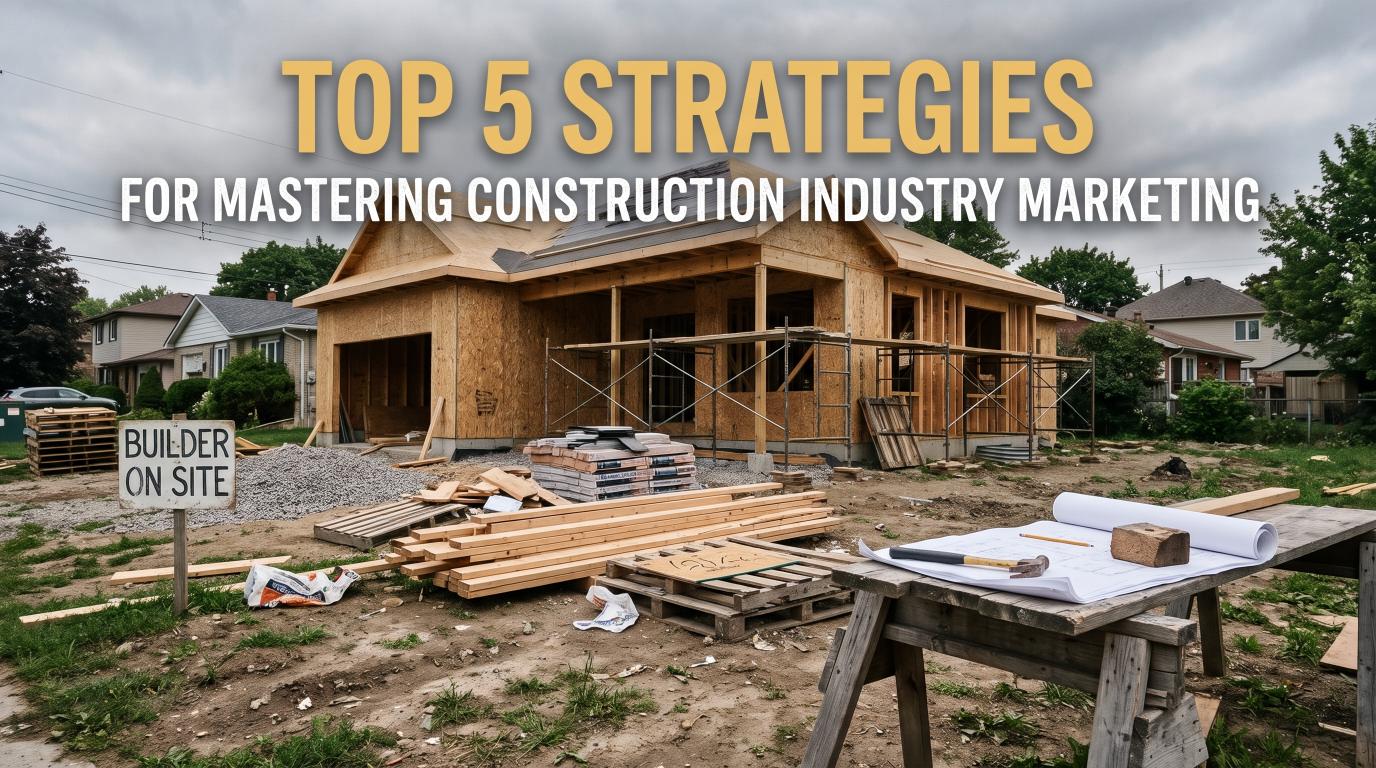
Marketing connects your business with clients who need your work and gives them clear reasons to trust you. An effective approach combines a focused marketing plan, credible content, and strong relationships, and the most important - consistent measurement. These five strategies help construction companies build a more reliable pipeline without chasing every channel or competing on price alone.
Introduction
Good marketing should make your construction business easier to find, understand, and evaluate. The goal is not simply more attention. It is more about the conversations you start about projects that match your expertise, service area, capacity, and commercial priorities.
Importance of Marketing in Construction
We know that potential clients cannot judge everything about your workmanship before hiring you. They need other ways to assess whether your company understands the project and can deliver quality work. Your website, project examples, references, proposals, and first conversations should help them make that assessment.
Think about the questions behind an inquiry.
A homeowner may want to understand how a renovation will affect daily life. A property manager may need confidence that work can be coordinated around occupied spaces. A commercial owner may want evidence that your team understands a comparable scope and can deliver the expected outcome.
Instead of relying on statements such as “quality construction” or “excellent service,” show what those promises mean. Explain how you organize communication, prepare for site constraints, document decisions, and handle changes. Show them a sneak peek into the future experience they will have working with you.
This also gives referrals a useful place to land and builds trust, which is essential in this business.
When a previous client recommends your company, the next person should be able to find information and examples. Treat marketing as the bridge between a recommendation and a productive conversation that brings you a consistent flow of clients who are happy to give you the job.
Overview of Construction Industry Marketing
Construction marketing includes activities that introduce your company to people who do not yet know you. Online advertising is one part of that work. The broader approach also includes search visibility, educational content, relationship building and client follow-up.
Organize these activities around the client's next decision:
Discovery: Help suitable prospects find your company through search, advertising, referrals, community activity, and professional networks.
Evaluation: Provide service details, relevant project examples, genuine feedback, and a clear explanation of your process.
Contact: Offer an appropriate next step, such as an introductory call or preconstruction discussion.
Selection: Support the conversation with a proposal, relevant qualifications, and answers to project-specific concerns.
Continuation: Stay connected with prospects and become someone for them who they can trust.
You do not need a separate campaign for every stage. One well-documented project might support a service page, a social post, a proposal, and a partner introduction. Start by identifying where suitable prospects currently lose confidence or momentum, then strengthen that part of the experience.
Strategy 1: Building a Solid Marketing Plan
Before selecting advertising platforms or commissioning content, decide what business outcome you want marketing to support. A focused plan should connect your preferred work with a defined audience, a credible message, and a manageable set of actions.
Defining Your Target Audience
Begin with the projects you want more of, not with a broad label such as “anyone who needs construction.” Review completed work and consider scope, location, client relationships, scheduling demands, profitability, and the resources required. Look for the types of projects your business is equipped to deliver well.
Then identify who influences the hiring decision. The person who discovers your company may not control the budget or approve the contract. For commercial work, distinguish the owner's priorities from those of a facilities manager, architect, or procurement contact. For residential work, consider whether more than one household member will evaluate the proposal.
Build a short audience profile using these practical details:
Project fit: The services, property types, and project stages you want to pursue.
Geographic fit: The locations your team can serve responsibly.
Decision roles: Who researches contractors, approves spending, and manages the relationship.
Main concerns: The uncertainties prospects raise during calls and meetings.
Evidence needed: Comparable work, references, process details, or relevant qualifications.
Readiness: Whether the prospect is exploring options, developing a scope, or preparing to select a contractor.
Use this profile to sharpen your message. A residential builder might explain planning decisions and communication during a home project. A commercial contractor might emphasize coordination, reporting, and experience with a relevant building type. Neither should claim capabilities it cannot demonstrate.
Also define unsuitable work. If a project falls outside your service area, capacity, or expertise, your marketing should not encourage it simply to increase the volume. Clear boundaries help prospects assess fit and give your team a consistent basis for qualification.
Speak with recent clients and review unsuccessful proposals when possible. Ask what prompted the search, what information helped, and what remained unclear. Use those answers to improve your audience profile rather than assuming your strongest selling point is the one clients value most.
Creating a Comprehensive Marketing Plan for Your Construction Business
A useful marketing plan for a construction business turns priorities into assigned work. It does not need elaborate language or a long presentation. The U.S. Small Business Administration recommends covering elements such as the target market, competitive advantage, sales goals, action plan, and budget. (sba.gov)
Start with a business objective that reflects your actual needs. You might want more inquiries for a particular service, stronger relationships with selected commercial buyers, or a steadier flow of suitable projects in an established area. Avoid making website traffic the main objective unless you can explain how it supports those needs.
Document the following:
Priority audience and service: Specify the project category and buyer you will focus on first.
Positioning: Explain why your business is a credible choice, using evidence rather than broad claims.
Core materials: Identify the service pages, project examples, photographs, and proposal assets you need.
Channels: Choose where you will reach that audience, including both digital and relationship-based activity.
Responsibilities: Assign content gathering, approvals, inquiry response, and reporting to named roles.
Budget and review: Record expected costs and decide how you will judge progress.
Budget for the work around the campaign as well as the campaign itself. Advertising may require a landing page, photography, tracking setup, and staff time to qualify inquiries. An event may require preparation, travel, follow-up, and useful materials. Include these costs when deciding whether an activity is affordable.
Set priorities in a sensible order. First, correct inaccurate business information and make contact easy. Next, strengthen the service and project information prospects need. Then test a focused acquisition activity. Promoting an unclear website more aggressively does not resolve the underlying communication problem.
Give the plan a working calendar. For example, assign one person to gather approved project material, another to review technical accuracy, and someone else to manage publication and follow-up. Choose a pace the team can sustain while delivering projects.
Finally, coordinate marketing with operations. Confirm availability before promoting a service or inviting urgent inquiries. If your schedule is full, use messaging that explains how you're planning conversations and outlines realistic next steps. Your marketing should create expectations your delivery team can meet.
Strategy 2: Leveraging Digital Advertising
Digital advertising gives you a way to test a specific message with a defined audience. Treat it as a controlled investment: choose a suitable service, create a relevant destination, establish tracking, and evaluate the quality of the resulting conversations.
Benefits of Online Presence
Your online presence should help a prospect understand what you do before they contact you. Make the basics easy to find: services, locations served, relevant experience, contact details, and the next step. A visitor should not need to search through general company language to determine whether you handle their type of project.
Build service pages around real buying decisions. Explain the work you undertake, what information you need from a prospect, and how an initial conversation proceeds. Support the explanation with approved project photographs and descriptions. If a qualification or credential is relevant, present it accurately and keep it current.
Review the contact experience on a phone as well as a desktop. Test every form, confirmation message, and contact button yourself. Ask someone unfamiliar with the business to find a service, review a project, and submit an inquiry. Their questions can reveal gaps your team no longer notices.
A useful project inquiry form might request:
The prospect's name and preferred contact method.
The project location and property type.
A short description of the proposed work.
The current planning stage and desired timing.
An optional place to provide drawings or additional details.
Keep the initial request proportionate. You need enough information to route and assess the inquiry, not a complete project specification before speaking with someone. Explain what will happen after submission without promising a response time your team cannot maintain.
Keep business listings aligned with your actual operations. Google recommends complete, accurate Business Profile information and explains that local results depend on relevance, distance, and prominence. A profile is therefore part of your local presence, not a guarantee of placement or a substitute for a useful website. (support.google.com)
Best Practices for Construction Advertising
Start with a narrow campaign brief. Define the service, audience, location, message, landing page, and desired action. “Generate construction leads” is too broad to guide useful decisions. “Invite suitable local owners to discuss a commercial renovation” gives your team a clearer basis for copy, targeting, and qualification.
For search advertising, consider the intent behind a phrase. Someone searching for a contractor for a defined project needs different information from someone researching career opportunities or construction methods. Write advertisements that accurately describe the work you want, rather than attracting attention with claims you cannot support.
Match each advertisement to a relevant page. An advertisement for office renovations should lead to information about office renovations, not a general homepage containing every service. Include related work, the service area, a clear process, and a suitable inquiry option. Keep important details consistent between the advertisement and the page.
Review geographic settings carefully. Google Ads distinguishes between people likely to be in a location and people showing interest in it. Choose the approach that fits your buyers: a local homeowner campaign may need a different setup from a campaign aimed at owners who manage properties from elsewhere. (developers.google.com)
Use a practical campaign checklist:
Make the offer specific: Promote a service or conversation your team can actually provide.
Keep claims verifiable: Avoid unsupported promises about price, speed, results, or superiority.
Check audience fit: Review locations, search intent, and exclusions against your project criteria.
Prepare follow-up: Assign inquiry ownership before the campaign starts.
Test the full journey: Submit a test inquiry and confirm it reaches the right person.
Record outcomes: Track qualified discussions and proposal opportunities, not just submissions.
Review search terms after launch rather than assuming every triggered search is relevant. Google Ads provides a search terms report that can inform negative keywords. For a client-acquisition campaign, investigate irrelevant job, training, equipment, or do-it-yourself searches, while checking that exclusions will not block useful inquiries. (support.google.com)
For social advertising, use a project or service message that makes sense without exaggerated visuals. A short walkthrough can introduce the scope and show a relevant detail. Choose the platform according to the audience you want to reach, and test one clear message before expanding your approach.
Set a review date and a spending boundary before launch. Do not increase spending merely because clicks are inexpensive. Read the inquiries, ask the sales team about fit, and check whether the campaign is creating work your business wants to pursue.
Strategy 3: Content Marketing for Construction Companies
Content should help prospects make informed decisions and help your team explain its work. The strongest starting material is usually close at hand: project documentation, recurring client questions, site observations, and the reasoning behind important construction decisions.
Types of Content to Create
Prioritize content that demonstrates relevance rather than volume. A detailed explanation of one suitable project can give a prospect more to evaluate than a gallery of unexplained images. Show the context, your scope, the challenge, and the approach your team took.
Build project stories around a repeatable format:
Starting situation: Describe the client's objective and the condition or use of the property.
Your role: Explain which parts of the work your company handled.
Project constraints: Identify relevant access, coordination, sequencing, or design considerations.
Delivery approach: Explain how the team addressed those conditions.
Documented outcome: State what was completed and include only results you can substantiate.
Create educational pieces from questions your team answers repeatedly.
Useful subjects might include preparing for an initial consultation, understanding the information needed for an estimate, organizing project selections, or comparing proposed scopes. Keep explanations plain, and distinguish general guidance from advice that requires a project-specific professional assessment.
Use video where movement or explanation adds value. A site walkthrough might show access arrangements or explain why a sequence matters. A team member can describe a detail in straightforward language without a heavily scripted presentation. Check the background for confidential documents, identifying information, and anything unsuitable for publication.
For social media, choose a consistent editorial focus rather than posting unrelated content to stay active. Consider Instagram for a visual project series, LinkedIn for professional commentary on projects, or YouTube for longer explanations. Treat those as possible formats to test with your audience, not as requirements to maintain on every platform.
One project can supply several useful pieces:
A website case study explaining the scope and approach.
A short visual post focused on one project detail.
A brief video answering a relevant client question.
A proposal example matched to a similar opportunity.
A client update or newsletter item with a practical takeaway.
Keep the substance consistent when adapting the format. A shorter post should not turn a qualified explanation into an absolute promise. Add context to before-and-after photographs so viewers understand what changed and which work your company performed.
Client feedback can support this material when it is genuine and used appropriately. Ask for an honest account of the experience rather than suggesting praise the client has not expressed. Select feedback that addresses useful concerns, such as communication or coordination, without editing it into a stronger claim.
Give estimators and project managers a simple way to contribute. Ask for a few approved photographs, the project scope, a challenge, and an explanation of the response. A marketing owner can shape that material into readable content and return it for factual review. This keeps technical knowledge involved without expecting field teams to write finished articles.
SEO Strategies for Increased Visibility
Search engine optimization should make your existing expertise easier to discover and understand. Start with useful pages for the services you genuinely provide, then connect those pages to relevant projects and educational material. Google's guidance emphasizes helpful content, descriptive titles, understandable links, and clear site organization; it does not promise automatic first-place rankings. (developers.google.com)
Use language that matches how clients describe their needs. “Commercial renovation contractor” may communicate more clearly than an internal service label. Add location context where it is useful and accurate. Read the page aloud to check that search terms have not made the wording repetitive or unnatural.
Build each main service page around a distinct purpose. Explain the scope, suitable project types, relevant experience, and next step. If two pages say nearly the same thing, reconsider whether they need to be separate. Avoid creating numerous thin pages that change only the town name without adding useful local information.
Review these fundamentals:
Page titles: Describe the service or subject clearly, including a location when relevant.
Headings: Organize the page so readers can find scope, process, evidence, and contact information.
Internal links: Connect service pages with related projects and practical explanations.
Images: Add relevant context and descriptive alternative text where appropriate.
Navigation: Make important services and contact options straightforward to reach.
These practices align with Google's SEO starter guidance, which also recommends placing high-quality images near relevant text and using descriptive link text. (developers.google.com)
Assign someone to maintain accuracy. Remove unavailable services, fix broken contact paths, and update project information when it becomes outdated. Check that the site represents your current capabilities rather than the business you operated several years ago. A technically polished page is not useful if its information misleads the reader.
For local visibility, maintain a Business Profile that accurately reflects your business model and eligible location information. Add suitable project images and respond professionally to feedback. Google states that reviews and positive ratings can help local ranking, but distance and other factors still matter; do not present reviews as a guaranteed route to a particular position. (support.google.com)
Use search data to identify communication gaps. Google Search Console reports search clicks, impressions, queries, and page performance. Review which relevant services are attracting attention, then compare that information with actual inquiries before deciding what to improve. More search visibility is useful only when it supports the work you want. (support.google.com)
Strategy 4: Networking and Partnerships
Relationship-based marketing deserves a place beside your digital work. Use professional connections and community involvement to learn about client needs, share relevant expertise, and create opportunities for appropriate introductions. Give these activities the same planning and follow-up discipline as a campaign.
Building Relationships with Other Firms
Identify organizations that encounter your ideal clients without assuming every contact should become a referral source. Depending on your services, this might include architects, engineers, designers, property managers, developers, suppliers, or specialist contractors. Focus on the relationships most closely connected to your preferred projects.
Prepare a concise explanation of your business. Describe the work you undertake, the area you serve, your typical role, and the point at which an introduction would be useful. Support it with a relevant project example rather than a broad statement that you can handle everything.
Before approaching a firm, consider what would make the relationship useful to them. You might share a practical construction perspective, help clarify a scope question, or provide an accurate example of related work. Respect their time and avoid turning an introductory conversation into an immediate request for leads.
Create a small relationship plan:
Identify priority organizations and the reason each is relevant.
Research the work they do before making contact.
Prepare a suitable project example or capabilities summary.
Agree on a useful next step during the conversation.
Record commitments and follow through when promised.
Choose events with a clear purpose. A trade gathering may suit professional introductions, while a community workshop may fit a residential audience. Before attending or sponsoring anything, identify who you hope to meet and what useful conversation you can offer. Evaluate the activity afterward using actual contacts and follow-up opportunities.
Keep relationship notes in a shared system. Record areas of interest, relevant services, previous conversations, and agreed actions. This helps your team continue the relationship thoughtfully rather than sending disconnected sales messages or repeatedly asking the same questions.
Collaborating on Projects and Promotions
A joint activity should solve a real audience problem. For example, a builder and designer might explain how early selections affect planning. A contractor and property manager might discuss preparing an occupied property for work. These are potential collaboration ideas, not promises that a particular event will produce contracts.
Agree on responsibilities before publication or promotion. Decide who prepares the material, checks technical statements, secures permissions, responds to inquiries, and records outcomes. Clarify whose services are being offered so the audience does not mistake a marketing collaboration for a joint contractual commitment.
Bring offline activity into the same follow-up process as digital activity. A printed project summary can direct readers to a relevant service page. An event conversation can lead to an agreed introductory call. A mailing should offer a clear next step and give your team a way to identify the source of the response.
Apply the same discipline to proposal development. Marketing for construction firms should support the people preparing bids, not operate separately from them. Maintain approved project summaries, team information, references, and process descriptions that can be selected for each opportunity.
Before submitting a proposal, ask:
Does every project example demonstrate something relevant to this scope?
Are capabilities, responsibilities, and qualifications described accurately?
Have technical team members checked the proposed approach?
Are assumptions and scope boundaries clear?
Does the proposal answer the buyer's stated evaluation requirements?
Do not confuse a strong presentation with a strong proposal. Clear formatting and persuasive language should make the substance easier to assess, not conceal missing information. Coordinate the final review across marketing, estimating, and the delivery team so the document reflects what the business can responsibly commit to.
Strategy 5: Measuring Success and Adjusting Strategies
Measurement should show which activities produce suitable opportunities and where those opportunities stall. Build a simple shared record before adding complex reporting. Consistent information about inquiries, qualification, proposals, and outcomes is more useful than a large dashboard nobody uses.
Key Metrics to Track
Start by agreeing on definitions. An inquiry is not automatically a qualified lead, and a qualified lead is not yet a proposal opportunity. Decide which project details and buyer information your team needs before moving a contact to the next stage.
A practical qualification check might include service fit, location, likely scope, planning stage, decision process, and capacity alignment. Do not reject an early-stage prospect simply because every detail is not known. Instead, distinguish an appropriate future opportunity from a project that is clearly unsuitable.
Track a small set of connected measures:
Metric | What it helps you understand | Important caution |
|---|---|---|
Inquiries by source | Which activities introduce prospects | Remove spam and duplicate contacts |
Qualified inquiries | Which sources attract suitable work | Use a consistent qualification definition |
Cost per qualified inquiry | Spending required to generate a suitable conversation | Include the costs relevant to the activity |
Proposal opportunities | How often conversations progress | Separate active opportunities from speculative requests |
Proposal win rate | Outcomes among decided proposals | Do not count pending proposals as losses |
Awarded work and margin | Commercial value of the resulting projects | Revenue alone does not show profitability |
Time between stages | Where opportunities wait or stall | Compare similar project types and time periods |
Use formulas consistently. Cost per qualified inquiry equals the relevant marketing cost divided by the number of qualified inquiries attributed to that activity. Proposal win rate equals won proposals divided by decided proposals for the group you are reviewing. Define the period and included costs so comparisons remain meaningful.
Keep attribution realistic. A prospect may encounter your company through a recommendation, an event, a search, and a project article before making contact. Record the first known source, relevant later interactions, and the prospect's own explanation when available. Do not force every opportunity into a single channel if the evidence is incomplete.
Assess return with care. If you calculate marketing ROI, define how you estimate attributable profit, which marketing costs you include, and how long you allow for outcomes. Avoid presenting the full value of an unsigned opportunity as a realized return. For recently launched activity, report early progress separately from completed commercial results.
Adapting Your Marketing Strategy for Construction Company
Adjust your approach by locating the specific weakness, not by replacing everything at once. Low visibility, poor-fit inquiries, incomplete follow-up, and unsuccessful proposals are different problems. Each calls for a different response, even if the overall symptom is an uncertain pipeline.
Use the evidence to choose the next action:
Relevant visitors are scarce: Review service coverage, targeting, search visibility, and promotion.
Visitors do not inquire: Check whether the page answers their concerns and makes contact straightforward.
Inquiries are unsuitable: Tighten service descriptions, geographic boundaries, campaign messages, and qualification.
Suitable inquiries stall: Review response ownership, discovery questions, and agreed next steps.
Proposals repeatedly lose: Examine project fit, scope clarity, buyer feedback, pricing assumptions, and supporting evidence.
Awards create delivery pressure: Revisit capacity and the type or timing of work being promoted.
Change one meaningful element at a time when practical. If you change the audience, offer, landing page, and qualification process together, it becomes harder to understand what influenced the result. Record the reason for each change and the outcome you expect to observe.
Allow for the timing of the work you pursue.
Review recent inquiries as early evidence, while evaluating proposal and award outcomes over a period that suits your actual sales process. Separate pending decisions from losses. Avoid abandoning a useful activity simply because opportunities have not yet reached a decision point.
Bring marketing, estimating, and operations together for the review. Ask which prospects were a good fit, what buyers misunderstood and where follow-up broke down. Use that discussion to update the plan, not merely to explain a report.
Protect useful foundations while testing improvements. Keep accurate service information, relevant project evidence, and inquiry handling in place even when changing promotional channels. A marketing strategy for a construction company should evolve with the evidence without becoming a different strategy every month.
Conclusion
Effective marketing for construction companies connects visibility with credible evidence and dependable follow-through. The five strategies work together: planning defines the audience, promotion creates contact, content supports evaluation, relationships build connections, and measurement guides the next decision.
Recap of Strategies
Use this sequence to turn the ideas into a manageable work plan:
Define your focus: Select the clients, services, locations, and projects you are best prepared to serve.
Strengthen the destination: Make your website and inquiry process clear before increasing advertising.
Document your expertise: Turn approved project material and client questions into useful content.
Develop relevant relationships: Offer practical value and support introductions with suitable evidence.
Review commercial outcomes: Follow opportunities beyond the initial inquiry and adjust the weakest stage.
Give each action an owner. A short list of completed improvements is more useful than an ambitious plan that competes unsuccessfully with daily project demands.
Final Thoughts on Effective Construction Industry Marketing
Start with the gap most likely to prevent a suitable client from moving forward. That may be an unclear service page, missing project evidence, poorly targeted advertising, or an inquiry nobody owns. Fix it, observe what changes, and choose the next improvement from the results.
Marketing does not need to make your company appear bigger or promise more than it can deliver. It should make your real capabilities easier to recognize and your business easier to work with. Build that clarity consistently, and keep the marketing aligned with the work you want to win.